

Bozeman Condo Buyer Representation
Buying a Condo in Bozeman? What Buyers Often Miss About HOA Responsibility
Condominium ownership in Bozeman, Belgrade and Southwest Montana can look different from what buyers expect. In many developments, owners may be responsible for limited common elements such as windows, garage doors, decks, patios, walkways or other exterior components tied to their unit.
One of the most common assumptions I hear from condo buyers is that the association takes care of essentially everything outside the interior walls.
In Bozeman and Belgrade, that is not always how condominium ownership is structured.
Depending on the declaration, an individual owner may be responsible for certain limited common elements or exterior components associated with the unit.
That can include things buyers do not always expect, such as windows, garage doors, patios, decks, walkways, exterior doors or certain concrete areas.
That distinction matters because a condo can look low-maintenance on the surface while still carrying significant individual ownership responsibility.
This is why, when my team helps a client purchase a condo, we do much more than review the monthly HOA fee. It is part of my broader approach to buyer representation in Bozeman , where due diligence is tailored to the property rather than treated as a generic checklist.
A Local Ownership Difference Buyers Often Miss
The HOA May Not Be Responsible for Everything Outside Your Walls
In Bozeman, Belgrade and throughout Southwest Montana, I regularly see condominium declarations that assign individual owners responsibility for certain limited common elements associated with their unit.
Depending on the condominium documents, those responsibilities may include:
- Windows
- Garage doors
- Patios
- Concrete associated with the unit
- Walkways
- Decks
- Exterior doors
- Other unit-specific exterior elements identified in the declaration
If a concrete patio begins cracking or spalling, a deck needs substantial work, or windows or a garage door need replacement, buyers should not automatically assume the association will pay for it.
The governing documents for the specific condominium determine those responsibilities.
I have been helping Bozeman-area condo buyers distinguish between individual-owner and association maintenance responsibilities for years because understanding that division can materially change the true cost of ownership.

Tamara's Condo Due-Diligence Framework
We Evaluate the Unit and the Association Together
Responsibility
Determine what the association maintains and what remains the individual owner's responsibility.
Financial Health
Review dues, reserves, capital contributions, assessments and available association financial information.
Physical Condition
Look beyond the subject unit for visible patterns involving roofs, siding, gutters, soffits, decks or concrete.
Insurance
Request the association insurance binder and declaration so the buyer's insurance professional can identify possible coverage gaps.
Use & Occupancy
Understand owner occupancy, rental concentration, rental caps, short-term rental rules, pets and other restrictions.
1. Start With the Condo Declaration
The declaration is one of the most important documents in the purchase because it helps define where the association's responsibility ends and the individual owner's responsibility begins.
Buyers should not assume that an exterior component automatically belongs to the association simply because it is outside the interior walls.
I want to understand who is responsible for major items such as:
- Roofing
- Siding
- Windows
- Garage doors
- Decks
- Patios
- Walkways
- Exterior doors
- Landscaping
- Snow removal
That responsibility can materially affect the future cost of ownership.
Primary Montana resource: For buyers who want to understand the statutory framework behind condominium ownership, the Montana Unit Ownership Act provides the state's legal framework. The declaration and other governing documents for the individual condominium still need to be reviewed for property-specific responsibilities.
2. After Nearly Two Decades in Bozeman Real Estate, I Don't Automatically Prefer Low HOA Dues
When I began working in Bozeman real estate, it was not unusual for me to encounter condominium associations with dues around $75 to $125 per month.
In 2026, many of the associations I personally encounter in Bozeman and Belgrade are closer to roughly $275 to $350 per month, although dues vary substantially depending on the development and what the association covers.
Those figures reflect my firsthand experience with local transactions rather than a market-wide HOA average.
Higher dues are not automatically a negative.
One lesson from nearly two decades of watching local condominium associations mature is that dues that are artificially low can create their own problems.
Buildings age. Roofs eventually need replacement. Siding requires maintenance. Insurance costs change. Snow removal costs money. Gutters, soffits, pavement, landscaping and other common infrastructure do not remain new forever.
I am often more interested in whether the association is adequately funded for its responsibilities than whether the monthly dues look inexpensive.
3. We Look Beyond the Subject Unit for Exterior Warning Signs
This is one of the more important parts of how I approach condo due diligence.
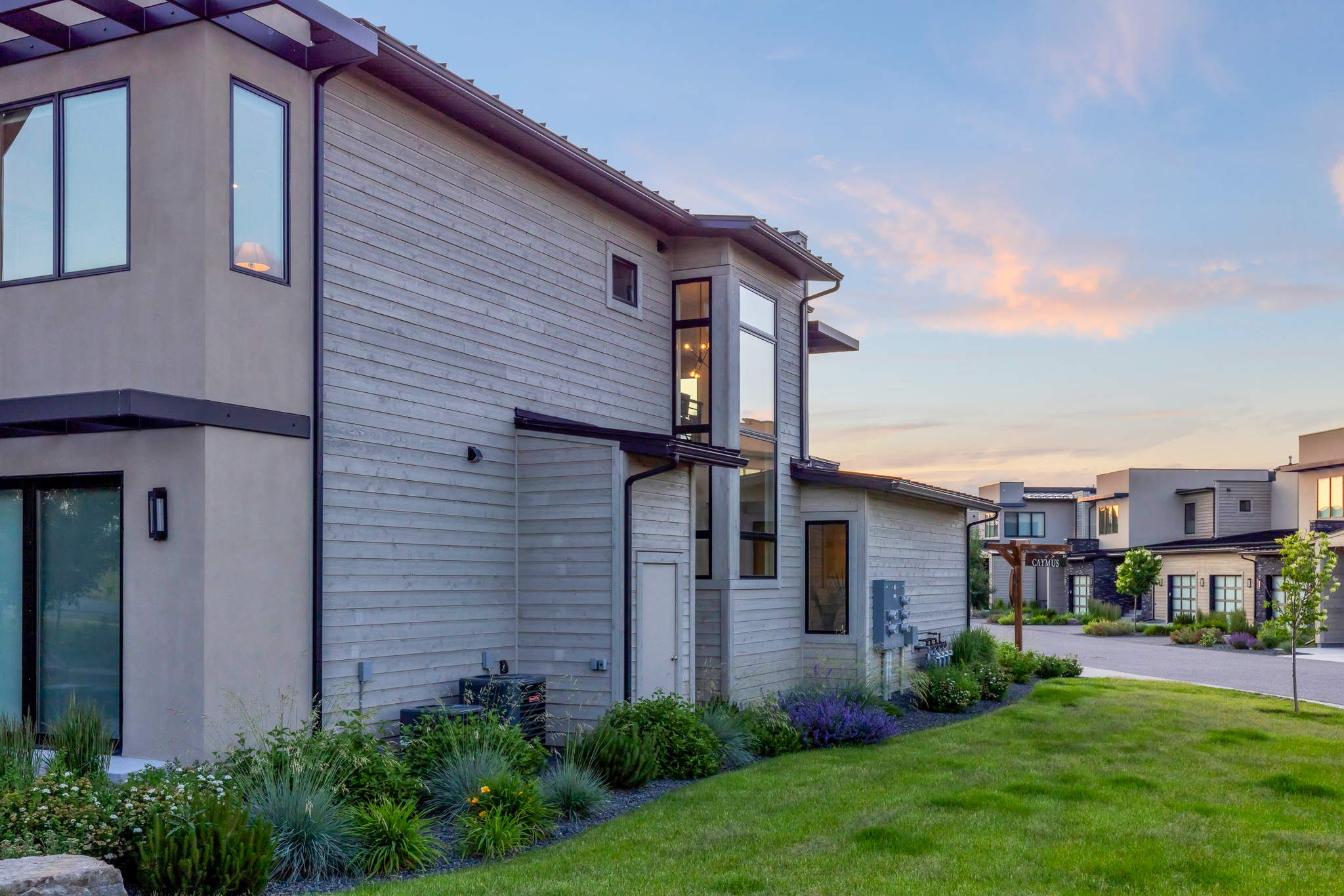
When appropriate and within the inspector's scope, I often ask the home inspector to pay attention to visible conditions throughout the development, not just the interior of the condo my client is purchasing.
I want them looking for patterns.
How do the roofs appear on nearby buildings?
Is siding showing deterioration?
Are gutters or soffits showing installation or drainage problems?
Are decks or concrete areas showing recurring cracking, spalling or deterioration?
The goal is not to inspect property my client does not own.
It is to identify visible patterns that may justify additional questions for the association.
If several buildings appear to be approaching the same maintenance cycle, I want to know whether the association has already identified the issue, whether work is planned and how it expects to pay for it.
A beautifully maintained individual unit does not necessarily tell us the condition of the association as a whole.
4. Roofing, Siding, Gutters and Soffits Deserve Attention
Some of the more significant issues I have seen arise in local condominium associations involve exterior systems that owners rarely think about when they are touring a unit.
Roofing, siding, gutter installation and soffit conditions can create expensive association-level maintenance questions.
That is one reason I do not want our due diligence to begin and end with the interior inspection.
If we see a recurring exterior issue, I want the association to explain:
- Whether the issue is known
- Whether repairs are planned
- Whether estimates have been obtained
- Whether reserves are available
- Whether a special assessment is being considered
- Whether the issue is the association's responsibility or an individual owner's responsibility
5. We Use a Detailed Condo Association Interview
My team uses a specific condo-association interview process because I would rather discover ownership obligations during due diligence than after closing.
We ask questions about:
- Current HOA dues and billing frequency
- Whether the association is mandatory
- Number of units
- Owner-occupied versus rented units
- Long-term rental restrictions
- Short-term rental restrictions
- Rental caps
- Pet restrictions
- Current reserve balance
- Reserve funding
- Special assessments
- Capital reserve contributions
- Setup and transfer fees
- Recent and upcoming HOA meeting dates
- What is actually included in the HOA fee
We do not ask these questions because every answer needs to be perfect.
We ask because surprises become considerably less charming after closing.
6. Owner Occupancy and Rental Concentration Matter
One question we routinely ask is how many units are owner occupied versus rented.
That matters for several reasons.
Depending on the condominium and buyer, rental concentration can be relevant to lending, insurance, rental eligibility and eventual resale.
But after years of working in the Bozeman and Belgrade condo market, I also pay attention to the condition and management of developments with a high concentration of rentals.
In my experience, developments with a larger percentage of owner occupants are often maintained differently from communities with a high percentage of rental units. That is not a universal rule, and there are very well-managed rental-heavy associations, but the pattern is evident enough in our local market that I want to understand it before my buyer purchases.
When fewer residents have a long-term ownership interest in the property, I pay especially close attention to exterior condition, common-area maintenance, reserves, association participation and whether recurring maintenance concerns appear to be addressed promptly.
This is one reason we do not simply ask whether rentals are allowed. We ask how many units are rented, how many are owner occupied, whether rental caps exist, and how the development is being maintained in practice.
We also want to know whether the association limits the number of units that can be rented and whether long-term or short-term rentals are restricted.
A buyer intending to rent the unit later should understand those rules before purchasing rather than assume today's ownership plan will remain available.
7. Ask What the HOA Fee Actually Covers
The monthly fee only makes sense when you know what it is paying for.
Depending on the association, dues may cover some combination of:
- Water and sewer
- Garbage
- Common-area maintenance
- Common-area landscaping and irrigation
- Exterior maintenance
- Exterior insurance
- Stucco or siding maintenance
- Snow removal
- Park and trail maintenance
- Professional management
Two associations with similar dues may be providing very different levels of service and assuming very different maintenance obligations.
8. Review Reserves Before the Next Major Repair Arrives
Reserve funding matters because common elements eventually require replacement.
We ask for the current reserve balance and, where available, information about how reserves are being funded.
I also want to understand whether there are upcoming major projects or special assessments under discussion.
A roof may not need replacement today.
That does not mean the buyer should ignore what will happen when it does.
The important question is whether the association has a realistic plan to fund its obligations.

9. We Request Financial Statements and Meeting Minutes
When available, we ask for association financial information such as an income statement and balance sheet.
We also request recent HOA meeting minutes.
Meeting minutes can help identify what owners and the board have actually been discussing.
Repeated conversations around roofs, siding, gutters, insurance, assessments, rentals or management may be worth further investigation.
One complaint does not define an association.
A repeated pattern deserves attention.
10. Review the Master Insurance Before You Choose Your Own Coverage
This is one step I particularly do not like skipping.
We request the association's insurance binder and condominium declaration and encourage our buyer to provide those documents to their own insurance professional.
The goal is to identify the line between what the association insures and what the individual owner needs to insure.
That is especially important when the owner may be responsible for limited common elements such as windows, garage doors, patios, decks or other exterior components.
The association's master insurance policy and the buyer's individual condo policy should be reviewed together.
Assuming that “the HOA has insurance” solves everything is not enough.
11. Determine Whether There Is Also a Master or Subdivision Association
Some properties have more than one layer of association responsibility.
A condo association may govern the building or immediate condominium development while a separate subdivision or master association manages broader amenities or infrastructure.
That can mean separate dues, separate assessments and different maintenance responsibilities.
When applicable, we ask about:
- Master-association dues
- Park and trail maintenance
- Common landscaping
- Common-area insurance
- Snow removal
- Special assessments
- Transfer fees
- Meeting minutes
Buyers need to understand the complete ownership structure, not just the first HOA listed in the MLS.
12. Read the Rules Through the Lens of Your Actual Lifestyle
Association rules can affect how a buyer lives in the property and what they can do with it in the future.
We pay particular attention to:
- Long-term rental rules
- Short-term rental restrictions
- Rental caps
- Pet restrictions
- Parking rules
- Storage
- Renovation restrictions
- Exterior modifications
A rule that does not matter to one buyer can completely change the value of the property for another.
Tamara's Condo Buyer Checklist
Before You Remove Due Diligence
- Review the condominium declaration and bylaws.
- Identify limited common elements and owner-maintenance responsibilities.
- Confirm current dues and what they include.
- Review the reserve balance and available financial information.
- Ask about current or upcoming special assessments.
- Review owner-occupancy and rental ratios.
- Evaluate whether rental concentration appears consistent with the condition and management of the development.
- Understand long-term and short-term rental restrictions.
- Review pet restrictions and other use rules.
- Ask the inspector to note visible exterior patterns when appropriate.
- Request recent HOA meeting minutes.
- Request the association insurance binder.
- Have the buyer's insurance professional review the binder and declaration.
- Confirm setup fees, transfer fees and capital reserve contributions.
- Determine whether a master or subdivision association also applies.
- Understand how the association's condition, management and finances could affect eventual resale.
For Condo Sellers
Prepare the Association Information Before You List
Sellers benefit from this same level of preparation.
If I am bringing a condo to market, I would rather organize the association information before a serious buyer begins asking for it.
Depending on the property, useful materials may include:
- Declaration and bylaws
- Current dues
- Limited common-element responsibilities
- Reserve information
- Special assessments
- Recent meeting minutes
- Master insurance information
- Owner-occupancy and rental information
- Rental and pet restrictions
- Master-association information, if applicable
The objective is not to present a perfect association. It is to give buyers enough accurate information to understand what they are purchasing.
Bozeman Real Estate Expertise
A Condo Should Make Sense After You Read the Paperwork Too
With more than 20 years in real estate, more than 500 homes sold and nearly $500 million in career sales, I have represented buyers and sellers throughout Bozeman, Belgrade and Southwest Montana across condos, luxury homes, new construction, relocation and complex transactions.
My role is not to replace an association accountant, attorney, inspector or insurance professional.
My job is to identify the questions that matter, organize the due-diligence process and make sure the buyer understands how the unit, the association and the ownership responsibilities fit together.
A condo should look good during the showing.
It should still make sense after you read the declaration, review the reserves, inspect the development and understand what you may eventually be responsible for.

Bozeman Condo Buyer Strategy
Request Tamara's Condo Due-Diligence Review
Considering a condo in Bozeman or Belgrade? My team can help you evaluate the declaration, association responsibilities, reserves, insurance, exterior condition, owner-occupancy and rental mix, and other ownership questions before you commit.
Help Me Evaluate This CondoAlready considering a specific condo? Send the address or MLS number and I can help identify the association and ownership questions worth investigating.
Frequently Asked Questions
Buying a Condo in Bozeman FAQs
How are condos different in Bozeman?
Many Bozeman and Belgrade condominium declarations assign individual owners responsibility for certain limited common elements, which can include windows, garage doors, patios, decks, walkways or other unit-specific exterior components. Buyers should review the declaration carefully rather than assume the association maintains everything outside the interior.
Can a condo owner be responsible for windows, decks or garage doors?
Yes. Depending on the declaration, those items may be designated as limited common elements or individual owner responsibilities. The governing documents should be reviewed for the specific condominium.
Why should a home inspector look at other buildings in the condo development?
When appropriate and within the inspector's scope, visible conditions on nearby buildings may reveal patterns involving roofing, siding, gutters, soffits, decks or concrete that deserve additional questions for the association.
What should I ask the condo association before buying?
Buyers should ask about dues, reserves, assessments, owner-occupancy and rental ratios, rental restrictions, pets, insurance, what the association maintains, upcoming projects, transfer fees, recent meeting minutes and whether another master or subdivision association also applies.
Are low HOA dues better?
Not necessarily. Low dues can be attractive, but buyers should also evaluate whether the association is adequately funding maintenance, insurance, reserves and future capital projects.
Why does owner occupancy versus rentals matter?
Owner occupancy and rental concentration may be relevant to lending, insurance, rental eligibility, association participation and future resale. In my experience in the Bozeman and Belgrade market, highly rented developments can also show different levels of maintenance and management, which is why I compare the rental ratio with the actual condition and operation of the association rather than looking at the percentage alone.
Should my insurance agent review the condo declaration?
It can be very helpful. My team requests the association insurance binder and declaration so the buyer's insurance professional can evaluate where the master policy ends and the owner's coverage responsibilities begin.
This article provides general real estate information and is not legal, accounting, insurance, lending, inspection or association-governance advice. Condominium declarations, limited common elements, maintenance obligations, reserves, insurance, rental rules and assessments are property-specific and should be independently reviewed with appropriately qualified professionals.
Enjoy this blog post? Click here to subscribe for updates
Leave A Comment